Wide Landscape View
Capture the city, water, bridge, and sky together to show the full setting.
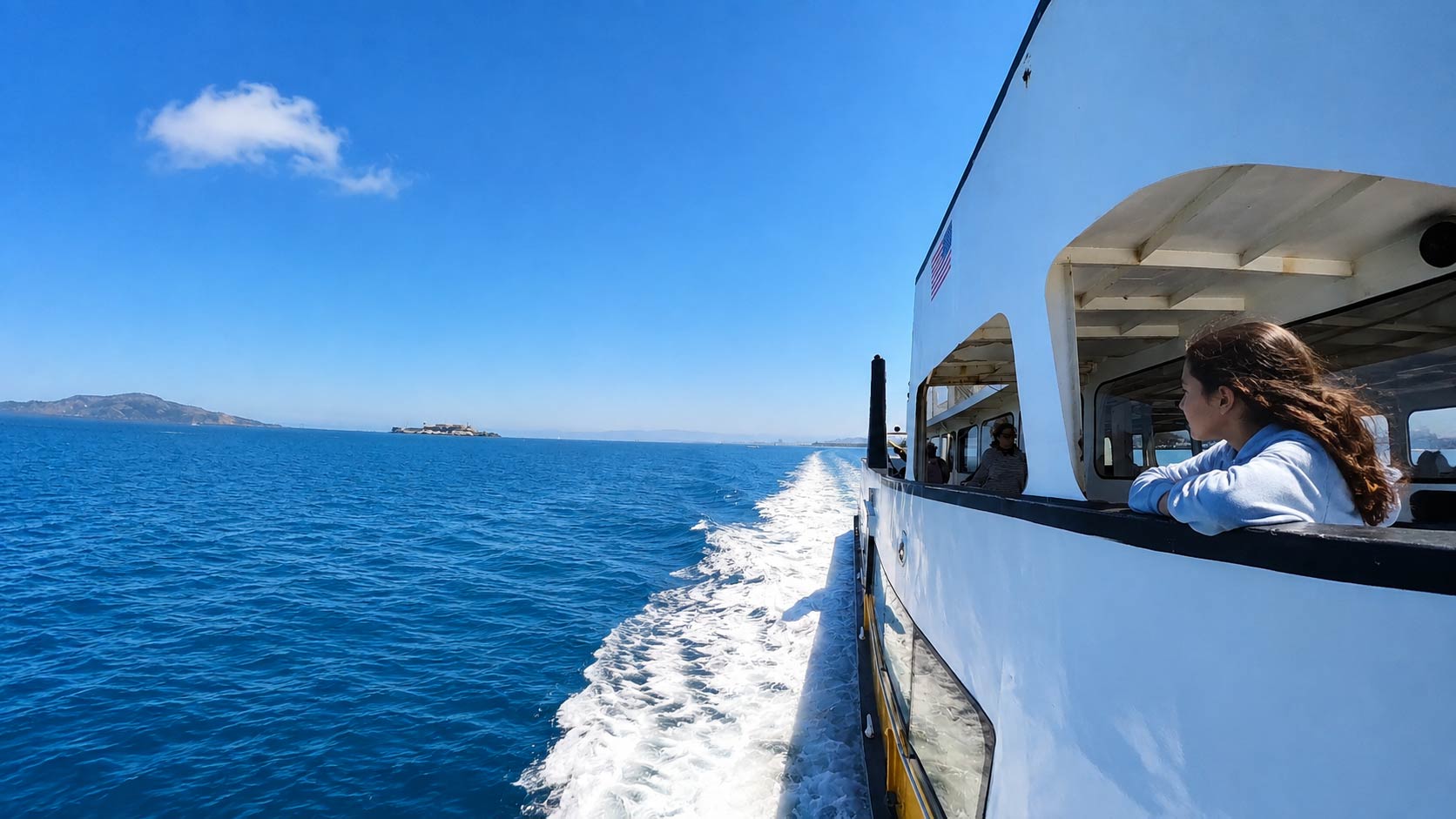
Discover what can be viewed from the water, how close sightseeing routes may travel, and the difference between an Alcatraz view cruise and an island landing tour.
 A Wider City View
At street level, San Francisco’s towers, hills, piers, and neighborhoods appear in separate pieces. From the bay, those pieces connect into a broad skyline framed by open water.
The view changes as the boat moves. Downtown may appear behind the waterfront, the Bay Bridge may frame part of the city, and Alcatraz or Treasure Island may enter the foreground.
This moving perspective is one reason a cruise is useful for photography and first-time orientation.
From the water, downtown buildings rise behind the piers and waterfront. The city’s elevation changes become easier to recognize as streets and neighborhoods climb away from the bay.
Rather than focusing on one building, use the cruise to see how the skyline relates to bridges, islands, shoreline, and surrounding hills.
A bay cruise provides a direct view of the waterfront’s long relationship with transportation, tourism, recreation, and maritime activity.
Individual piers, vessels, shoreline structures, and public spaces appear as part of one continuous edge rather than isolated destinations.
Capture the city, water, bridge, and sky together to show the full setting.
Use tighter framing for towers, waterfront buildings, and architectural contrasts.
Include railings, wakes, islands, or passing vessels carefully to create depth.
Daytime emphasizes building detail and waterfront clarity. Golden hour softens the scene and can add warmer color to buildings and clouds.
Evening views shift attention toward interior lights, bridge illumination, silhouettes, and reflections on the water.
The Bay Bridge creates long architectural lines that contrast with the vertical skyline. Depending on the route, it may appear beside, behind, or in front of downtown buildings.
Treasure Island can add another layer between the bridge, water, and city.
Best for clear building detail, families, first-time visitors, and landmark identification.
Best for warmer light, silhouettes, reflections, and the transition to evening.
Best for groups that want skyline photos and more control over the event setting.
The bay creates distance and an open foreground, allowing more of downtown, the waterfront, bridges, and hills to appear together.
Daytime is better for detail, while sunset is better for warmer color and atmosphere.
Depending on the route and position, the Bay Bridge may appear beside or behind parts of the skyline.
A standard phone camera or moderate wide-angle lens works well for broad views; zoom is useful for building details.
Visibility varies. Fog may hide portions of the city or create dramatic layered scenes.
Step away from street-level views and see downtown, bridges, islands, and the waterfront as one connected bay panorama.
View Sightseeing Cruises →