Outdoor Deck
Best for unobstructed photos, open views, and feeling the scale of the bridge.
Discover what can be viewed from the water, how close sightseeing routes may travel, and the difference between an Alcatraz view cruise and an island landing tour.
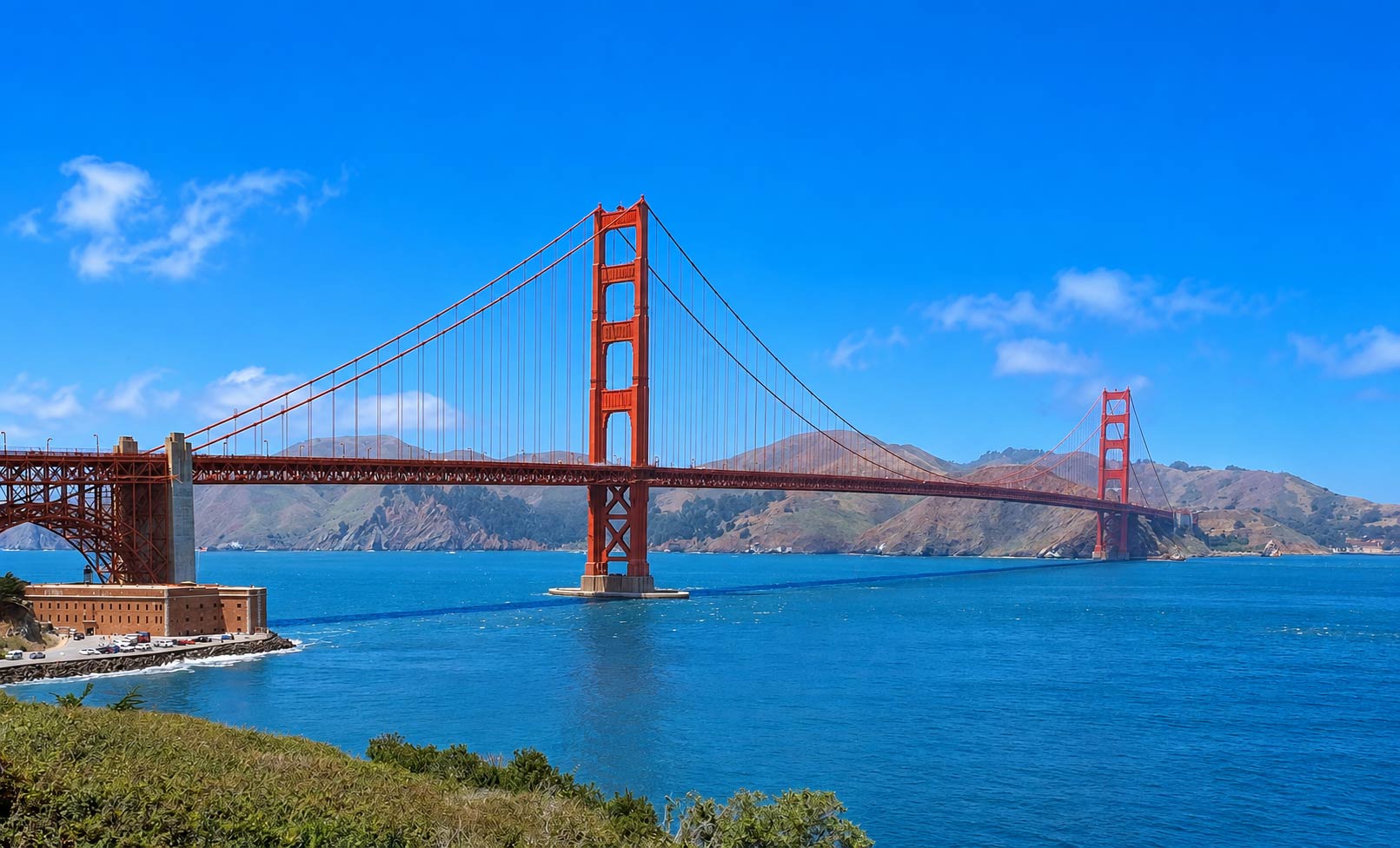 Iconic San Francisco
Land-based overlooks show the Golden Gate Bridge from above or from the shoreline. A cruise changes the perspective by bringing you closer to the waterline, where the towers rise more dramatically and the full span connects the city to the Marin Headlands.
The view changes throughout the route. Depending on direction, weather, and position on deck, you may see the bridge framed by the skyline, hills, open Pacific water, or afternoon light.
Because the bridge sits near the entrance to the bay, conditions can feel cooler and windier than they do along the downtown waterfront.
Daytime usually provides the strongest visibility for bridge details, shoreline features, and landscape photography. It is the safer choice when identifying landmarks matters most.
Sunset can provide warmer colors and a more dramatic mood, but the exact appearance depends on fog, cloud cover, season, and the direction of the light.
San Francisco Bay conditions can change quickly. A departure may begin in sunshine near the waterfront and encounter wind or fog closer to the Golden Gate.
Fog does not always ruin the experience. It can create dramatic photographs as portions of the towers and cables appear through moving cloud layers.
Best for unobstructed photos, open views, and feeling the scale of the bridge.
Useful when the boat approaches at an angle and you want a longer sequence of bridge views.
A comfortable place to warm up while still watching through windows between outdoor photo opportunities.
Take several photos rather than waiting for one perfect angle. The relationship between the bridge, skyline, hills, and water changes every few seconds as the boat moves.
Use a secure grip or strap, clean your lens before boarding, and avoid placing the bridge directly at the edge of the frame. Wider shots capture scale; closer shots highlight towers and cables.
The hills north of the bridge create a natural backdrop and help show the bridge’s scale.
The historic waterfront beneath the southern side of the bridge may be visible depending on route and conditions.
Looking back toward the city can produce bridge-and-skyline compositions from the bay.
Wind across the water can make the temperature feel lower than the forecast suggests. A light jacket or wind-resistant outer layer is useful throughout the year.
Choose secure shoes and avoid loose hats or accessories that can be difficult to manage on an outdoor deck.
Best for clear bridge details, families, first-time visitors, and straightforward sightseeing.
Best for warmer light, couples, celebrations, and more atmospheric photography.
Best for proposals, groups, corporate outings, and events that need a more personal setting.
Routes can vary with weather, traffic, vessel schedule, and captain discretion. Review the specific cruise description before booking.
Visibility depends on fog, clouds, and weather. The bridge may be fully visible, partly covered, or dramatically framed by fog.
The best side depends on the direction of travel. Outdoor viewing areas allow you to move when it is safe and permitted.
It often feels cooler and windier near the Golden Gate than along the protected waterfront, so layers are recommended.
Yes. A sightseeing cruise can be a family-friendly way to see the bridge without a long walking route.
See the bridge, skyline, islands, and waterfront during a daytime or sunset cruise designed around the bay’s most memorable views.
View Sightseeing Cruises →